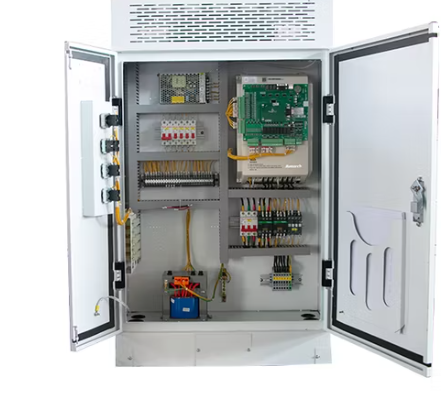

OmniCore Signal Station presents a modular framework for data routing and optimization within dense networks. The numeric identifiers signal a structured pattern, suggesting decodeable relationships and scalable, latency-aware objectives. The design emphasizes adaptive QoS, persistent sessions, and layered security to support rapid handoffs and privacy-conscious performance. Its analytic core invites scrutiny of how modular components interact under load, prompting questions about deployment in urban and distributed environments. The next step reveals whether the theory translates to tangible gains.
What Is OmniCore Signal Station? A Quick Foundation
OmniCore Signal Station is a modular communications system designed to manage, route, and optimize data signals across diverse networks. It operates through defined protocols, scalable architectures, and transparent interfaces.
Omnicore basics inform core functions, while Signal station concepts outline data flow, fault tolerance, and prioritization.
Two items—modularity and adaptability—frame implementation, enabling predictable performance and freedom to evolve.
Decoding the Numbers: 18338858259, 2107644963, 8339014153, 6266390332 and 67.207.72190
The sequence 18338858259, 2107644963, 8339014153, 6266390332 and 67.207.72190 is presented as numeric identifiers whose structure invites a methodical decoding approach.
The discussion employs decoding techniques to reveal hidden regularities.
Analytical attention focuses on numeric patterns, symmetry, modular relationships, and segment-wise interpretation, ensuring clarity, precision, and freedom-driven curiosity without speculative embellishment.
How OmniCore Optimizes Connectivity: Speed, Security, and Seamless Access
How does OmniCore optimize connectivity across speed, security, and seamless access? The system employs modular bandwidth allocation, latency-aware routing, and adaptive QoS to maximize throughput while minimizing jitter.
Security enhancements are layered through encryption, anomaly detection, and tokenized access.
Connectivity optimization emphasizes seamless handoffs and persistent sessions, enabling reliable, freedom-aligned performance without arbitrary constraints or vendor lock-in.
Practical Scenarios: Where This Signal Station Shines for Individuals and Businesses
For individuals and businesses, OmniCore Signal Station demonstrates targeted applicability across dense urban environments, distributed workforces, and high-velocity operational contexts. In practice, scenarios emphasize privacy practices, minimizing data exposure while sustaining performance. Network reliability remains a core metric, guiding deployment in critical tasks, remote coordination, and rapid response workflows. Analytical evaluation highlights scalable, predictable outcomes without compromising freedom or autonomy.
Frequently Asked Questions
Is Omnicore Signal Station Compatible With Legacy Networks?
The answer: compatibility questions arise; OmniCore Signal Station shows limited compatibility with legacy networks. It supports selective legacy interfaces but lacks universal compatibility, requiring adapters or upgrades. Analysts note operational constraints, emphasizing precise, formal assessment for freedom-minded stakeholders.
How Is User Privacy Protected by Omnicore’s Protocol?
OmniCore’s protocol implements privacy safeguards and data minimization, ensuring incident data collection is limited and encrypted. It analyzes governance rules, minimizes metadata, and prioritizes user consent, delivering transparent, auditable privacy controls while preserving system functionality for freedom-loving users.
Can the Station Operate Offline or With Limited Connectivity?
“Where there’s a will, there’s a way.” The station can operate offline or with limited connectivity, leveraging legacy compatibility, ensuring privacy protection through local processing, synchronized later, and maintaining robust data handling under constrained network conditions.
What Maintenance Cadence Is Required for Optimal Performance?
The maintenance cadence should be quarterly, aligning checks for firmware, hardware integrity, and calibration to sustain optimal performance. The protocol delivers predictable outcomes, enabling operators to maintain autonomy while ensuring reliable uptime and system robustness.
Are There Any Known Regulatory Restrictions by Region?
Regulatory mapping indicates regional compliance varies; no universal restrictions exist. Regions may impose spectrum, licensing, and ERP limits. For each jurisdiction, adherence is essential, with continuous monitoring of regulatory changes and proactive adjustments to maintain compliance.
Conclusion
In a concise, algorithmic summary, OmniCore Signal Station translates identifiers into actionable routing insights, parses patterns into optimized pathways, and aligns security with performance. It decodes structure, leverages modular relationships, and implements scalable, latency-aware decisions. It enhances speed through intelligent handoffs, strengthens security via layered measures, and sustains seamless access across dense networks. It adapts to variable workloads, preserves privacy, and supports persistent sessions. It delivers predictable outcomes, repeatable results, and robust resilience for individuals and businesses.


 By
By




 By
By