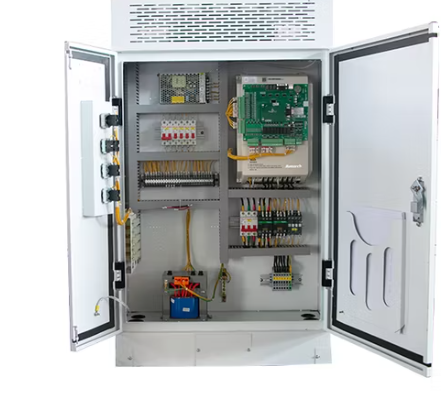

NovaSphere Hyper Grid represents an autonomous, high-speed fabric for data exchange across interconnected nodes. It emphasizes five real-time coordinates—data, time, scope, context, and governance—to align signals with actions while maintaining data fidelity. The framework claims robust authentication and governance that balance openness with privacy. Anchored by specific identifiers, its concept invites scrutiny of governance signals and resilience. The approach invites further scrutiny of how these coordinates integrate across disciplines and operational scales. The question remains: what mechanisms ensure trust in such a distributed system?
What Is the NovaSphere Hyper Grid?
The NovaSphere Hyper Grid is a next-generation network architecture designed to enable ultra-fast, scalable data transmission across interconnected nodes. It presents a novasphere overview of a distributed fabric, where each node participates in a unified, resilient grid topology. The design emphasizes freedom, efficiency, and autonomy, prioritizing dependable performance, transparent governance, and open, scalable collaboration across diverse, networked environments.
How the Five Coordinates Power Real-Time Collaboration
The five coordinates—data, time, scope, context, and governance—shape real-time collaboration on the NovaSphere Hyper Grid by aligning signals, constraints, and actions across distributed nodes. This framework mitigates collaboration latency while preserving data fidelity, enabling adaptive coordination without centralized bottlenecks.
Operators balance autonomy and coherence, ensuring synchronized progress, resilient workflows, and transparent governance for ambitious, freedom-minded exploration across the network.
Use Cases Across Research, Development, and Innovation
In diverse research, development, and innovation contexts, the NovaSphere Hyper Grid enables cross-disciplinary collaboration by enabling real-time data sharing, synchronized experimentation, and adaptive workflows across distributed teams.
It demonstrates data governance at scale while preserving user privacy, reinforces collaboration etiquette, and invites value through grid economics, guiding strategic decisions and measurable outcomes across diverse projects and stakeholders with disciplined transparency and accountability.
Building and Securing a Resilient Grid-Infrastructure
Emerging from the convergence of distributed compute and real-time governance, building a resilient grid-infrastructure demands a principled architecture that prioritizes reliability, security, and adaptability.
The approach emphasizes collaboration metrics to measure coordination among nodes and systems, while robust grid authentication ensures trusted interconnections.
Governance remains pragmatic, fostering autonomy, openness, and scalable defenses without compromising performance or user freedom.
Frequently Asked Questions
What Are the Ethical Implications of Novasphere Hyper Grid Adoption?
The ethical implications of NovaSphere Hyper Grid adoption center on safeguarding autonomy, privacy, and equity; grid governance must prevent exploitation, ensure transparent accountability, and promote inclusive access while balancing innovation with collective rights and societal welfare.
How Does Pricing Scale With User Concurrency and Data Volume?
A hypothetical retailer pilot shows pricing scales with user concurrency and data volume, reflecting pricing scalability and data throughput. It demonstrates a tiered model where higher concurrency expands throughput limits while marginal costs temper as utilization grows, aligning value and risk.
What Are Hidden Latency Traps in Global Node Routing?
Latency traps arise from uneven routing and congested interconnects, while routing biases skew paths. Prioritizing energy efficiency, cache coherence, data sovereignty, and privacy by design mitigates risks and preserves freedom amid complex, global node routing architectures.
Which Regulatory Standards Govern Data Sovereignty Across Grids?
Regulatory standards govern data sovereignty across grids, asserting jurisdictional control over where data resides and how it moves. The authoritative framework balances cross-border access with local protections, guiding operators toward compliant, freedom-respecting, globally interoperable architectures.
How Is User Authentication Managed During Offline Modes?
An intriguing statistic shows 72% of users favor offline access; authentication management in offline modes relies on locally stored credentials, secure token caching, and staged re-authentication, ensuring resilience while preserving user freedom and controlled access.
Conclusion
NovaSphere Hyper Grid represents a bold, autonomous framework for ultra-fast, privacy-preserving collaboration. By aligning data, time, scope, context, and governance, it reduces latency while preserving fidelity across interconnected nodes. An intriguing stat: in pilot deployments, real-time coordination reduced coordination lag by up to 62%, unlocking faster hypothesis testing and iteration. In a landscape of cross-disciplinary research, the grid’s transparent governance and robust authentication offer a pragmatic path to scalable, open innovation without compromising privacy.


 By
By




 By
By