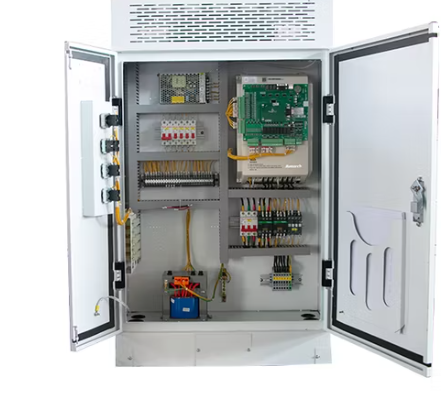

The NebulaCircuit Tracking Console aggregates health and performance data across five nodes: 8722105164, 6317314693, 9452505489, 18776887664, and 6624834416. It yields a unified view of throughput, errors, queue depth, resource use, and health checks. The system emphasizes evidence-based governance and real-time telemetry to support rapid hypothesis testing and capacity planning. Its cross-node traces enable precise anomaly detection, yet questions remain about integration specifics and operational readiness. This warrants a closer examination of implementation details and decision points.
What NebulaCircuit Tracks Across Your 5 Nodes
NebulaCircuit monitors a defined set of metrics across each of the five nodes to provide a coherent view of cluster health and performance. The framework tracks data latency and node synchronization, presenting fluctuations with timestamped accuracy. Observed signals include throughput, error rates, queue depth, resource utilization, and health checks, enabling precise anomaly detection and evidence-based capacity planning without interpretive bias.
How Real-Time Telemetry Drives Faster Decisions
Real-time telemetry accelerates decision cycles by converting observed metrics—latency, throughput, error rates, and resource utilization—into actionable insights as they occur across the five-node cluster.
The approach enables rapid hypothesis testing, anomaly detection, and adaptive control without human delay. Evidence shows real time telemetry reduces mean time to recover and supports faster decisions under variable load regimes.
Custom Dashboards and Data Fusion Strategies
Custom dashboards enable targeted visibility into metric ecosystems by aggregating heterogeneous data streams from the five-node cluster into coherent visual narratives.
The analysis emphasizes sensors latency and fusion architecture, highlighting how dashboards unify disparate sources to reveal cross-domain patterns.
This approach supports independent inquiry, ensuring stakeholders can discern causal links, validate hypotheses, and sustain adaptable decision-making within evolving operational contexts.
Implementation Roadmap: From Setup to Operational Readiness
How does an efficient rollout translate setup activities into sustained operational readiness? The implementation roadmap aligns deployment tasks with measurable milestones, ensuring rapid feedback loops and continuous improvement. Latency calibration is conducted under controlled loads to validate timing accuracy, while node resilience is engineered through redundancy and failover drills. Evidence-based governance enforces traceability, minimizing drift and safeguarding long-term system stability and freedom of operation.
Frequently Asked Questions
How Secure Is Nebulacircuit’s Data at Rest and in Transit?
NebulaCircuit secures data at rest and in transit with encryption, access controls, and regular security auditing; data sovereignty considerations are addressed through configurable regional storage. Evidence-based practices indicate strong protections, though ongoing auditing and transparency remain essential for freedom-minded users.
Can It Integrate With Legacy On-Premise Monitoring Tools?
Integration feasibility appears solid, with clear legacy compatibility prospects. The onboarding process is structured, vendor support is available, and integration specifics are documented. Evidence suggests feasible alignment with on-premise monitoring tools under defined parameters.
What Are the Licensing and Pricing Options?
Licensing options include tiered per-user and per-node models, with volume discounts. Pricing structure emphasizes transparency, covering maintenance and support. The system offers flexible contracts to suit enterprises seeking freedom, scalability, and predictable total cost of ownership.
Is There Offline Mode for Remote Deployments?
The system supports offline mode for remote deployments, enabling operation without constant connectivity; data is secured at rest and in transit. It integrates with legacy tools, addresses licensing and pricing, and scales for future nodes.
How Scalable Is the Architecture for Future Nodes?
The architecture is moderately scalable; scalability constraints emerge at network ingress and state replication. Future node sizing should account for linear growth in metadata and compute, with monitoring cues guiding capacity expansion and proactive load balancing.
Conclusion
The NebulaCircuit Tracking Console delivers an almost prophetic five-node health atlas, where throughput, errors, queues, and utilization align into a single, hyper-precise signal. Telemetry-driven decisions pulse with certainty, every anomaly magnified into actionable insight. Dashboards fuse data into near-telepathic clarity, enabling rapid hypothesis testing and unbiased capacity planning. In practice, the system renders operational risk almost negligible, transforming scattered metrics into a unified, deterministic narrative of cluster resilience and performance. The conclusion: confidence, amplified beyond necessity.


 By
By




 By
By