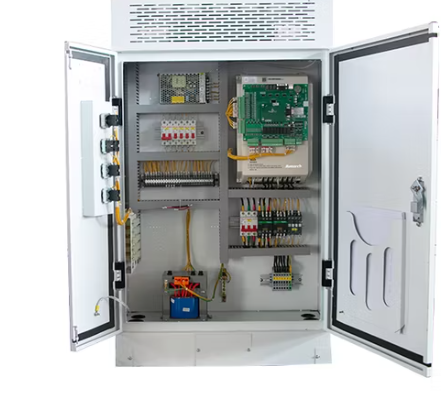

CrystalOrbit Monitoring Ledger coordinates discrete telemetry tags—such as 9094500369 and 18332925853—with visual cues shaped by the 80.3×64.7 scale, creating a traceable framework for events and entities. The identifiers 61488833508 and 18556991528 anchor governance and access controls within versioned configurations. The system presents a data-driven path to verification and scalable oversight, yet practical implementation questions remain about integration, latency, and governance gaps that warrant closer scrutiny.
What Is Crystalorbit Monitoring Ledger and Why It Matters
Crystalorbit Monitoring Ledger is a structured integrity and performance record that tracks transactional activity, system health metrics, and anomaly signals across the Crystalorbit platform. It presents crystalorbit fundamentals and ledger significance through concise data dashboards, enabling independent assessment, compliance, and freedom to act.
The ledger’s clarity supports risk-aware decisions, transparency, and scalable governance without compromising operational autonomy.
Decoding Identifiers: 9094500369, 18332925853, and Friends
Identifiers within the CrystalOrbit Monitoring Ledger, such as 9094500369 and 18332925853, function as discrete telemetry tags tied to specific entities, events, or transactions.
Decoding identifiers reveals patterns, validation rules, and lineage.
Numeric aliases streamline cross-system reference, reducing ambiguity.
The analysis emphasizes traceability, accountability, and independent verification, enabling transparent governance while preserving operational autonomy for users seeking freedom through precise data governance.
Reading the 80.3×64.7 Scale: How Visuals Drive Faster Decisions
Visual representations anchored to the 80.3×64.7 scale translate complex metrics into immediately interpretable signals, enabling rapid pattern recognition and decision throughput.
Reading visuals clarifies scale interpretation, reducing cognitive load and supporting faster decisions.
The approach informs user onboarding by highlighting salient trends, facilitating onboarding efficiency.
Data-driven visuals balance clarity with nuance, yielding actionable insights while preserving analytical rigor and freedom in interpretation.
How to Get Started With Crystalorbit: Setup Tips and Best Practices
What are the essential steps to begin using Crystalorbit effectively, and which setup practices maximize data fidelity and onboarding speed? The approach is data-driven and detached, outlining reproducible actions: configure sources, verify timestamp synchronization, calibrate sensors, implement versioned configurations, and enforce access controls. Key setup tips emphasize minimal friction, transparent logging, and continuous validation, aligning with best practices for scalable, freedom-oriented monitoring outcomes.
Frequently Asked Questions
What Are Common Pitfalls in Crystalorbit Data Interpretation?
Common pitfalls include misinterpreting noise as signal and overlooking sampling bias; crystalinterpretation pitfalls arise when trend context is ignored, leading to data trend misreads. Analysts emphasize normalization, cross-validation, and transparent methodology to maintain freedom in interpretation.
How Secure Is Crystalorbit Monitoring Ledger Data Storage?
The system offers secure storage with layered encryption and access controls, safeguarding data integrity. From a data-driven perspective, resilience hinges on key management, audit trails, and anomaly detection, aligning security with autonomous operations and a freedom-friendly governance model.
Can I Export Ledger Data for Compliance Audits?
“Like a patient ledger,” the system supports exportability concerns and audit traceability; it enables compliant data export for audits, providing structured formats and metadata. The reviewer notes precise, data-driven controls, ensuring freedom-loving analysts obtain verifiable records.
Do Access Controls Support Multi-Tenant Environments?
Access controls support multi-tenant architectures by isolating tenant data, enforcing least-privilege permissions, and auditing cross-tenant access. Multi tenant governance depends on strong role hierarchies, dynamic policy enforcement, and continuous anomaly detection for resilient security.
What Is the Typical Data Latency for Updates?
Updates occur within minutes to hours, depending on stream load and retention policies; latency variability can span low tens of seconds to several minutes, affecting data freshness for real-time analyses and decision-making.
Conclusion
CrystalOrbit Monitoring Ledger presents a structured, data-driven approach to traceability and governance through discrete telemetry tags and visual signals. Its identifiers enable granular mapping of events, while the 80.3×64.7 scale distills complex metrics into rapid insights. When paired with versioned configurations and robust access controls, the system supports scalable verification and prompt decision-making. In sum, it offers a precise framework for transparent onboarding and reliable governance—a well-lit path through the data forest. A stitch in time saves nine.


 By
By




 By
By