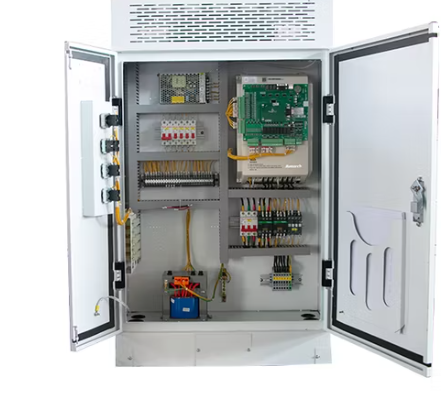

InfinityWave Connectivity Core coordinates five core lines—6139090796, 3606338409, 4055445123, 7183320600, 2505814253—as a centralized, privacy-conscious nervous system. It manages data flow, routing, and fault management with deterministic performance and auditable governance. The system enforces zero-trust security while enabling edge-cloud integration and localized inference. Its modular design supports scalable, resilient operations across distributed architectures, but questions remain about how synchronized signaling sustains end-to-end low latency under diverse workloads.
InfinityWave Connectivity Core and Why It Matters
The InfinityWave Connectivity Core serves as the central nervous system of the system’s network, coordinating data flow, routing decisions, and fault management across all modules. It emphasizes privacy risks and latency optimization, measuring throughput, and enforcing policies.
The architecture prioritizes deterministic performance, modular scalability, and transparent governance, ensuring predictable behavior, secure interconnects, and auditable operations within freedom-oriented engineering practices.
How the 6139090796, 3606338409, 4055445123, 7183320600, 2505814253 Lines Work Together
How do the 6139090796, 3606338409, 4055445123, 7183320600, and 2505814253 lines integrate within the InfinityWave Connectivity Core to ensure coordinated data flow, consistent routing, and unified fault management?
Each line interoperates through synchronized signaling, shared state, and centralized control planes.
Implementing synergy supports seamless interconnectivity, while Optimizing routing minimizes latency, balances load, and preserves resilience across the mesh without compromising freedom-focused operational autonomy.
Technologies Driving Burst-Ready Speed, Security, and Reliability
Technologies driving burst-ready speed, security, and reliability center on scalable network primitives, zero-trust access models, and deterministic latency controls. The architecture emphasizes data latency reduction through streamlined paths and edge orchestration, while fault tolerance is achieved via redundant pathways and robust failover. Security governance enforces policy, auditing, and compliant controls; redundancy strategies ensure uninterrupted service despite component failures.
Real-World Impact: Edge Computing, Cloud Integration, and Scalable Architecture
Edge computing and cloud integration redefine operational latency and data sovereignty by distributing processing closer to data sources while maintaining centralized orchestration.
This real-world framework enables scalable architecture through edge collaboration and modular deployment, balancing autonomy with governance.
Latency optimization emerges from localized inference, tiered storage, and synchronized caches, delivering predictable performance, cost efficiency, and resilient workflows across distributed ecosystems.
Frequently Asked Questions
How Do These Numbers Map to Specific Hardware Components?
The numbers do not map to fixed hardware components; they function as identifiers or addresses within a system architecture. Two word discussion ideas: component mapping, architecture overview. Neutral, precise, structured analysis enables flexible hardware interpretation and freedom of integration.
Can This Core Scale Beyond the Listed Model Numbers?
The core cannot exceed its defined model bounds; scaling beyond the listed numbers encounters scaling limitations and licensing implications. Imagery suggests locked circuits acknowledging constraints, while the system remains precise, structured, and technically descriptive for an audience seeking freedom.
What Are Typical Latency Profiles in Mixed Workloads?
Latency profiles for mixed workloads vary, with moderate network latency and memory bandwidth constraints, influenced by work distribution, node resilience, and QoS guarantees; scaling strategies, licensing models, and failure domains shape SLA considerations, concurrent workloads, and fault isolation.
Do These Lines Require Proprietary Software Licenses?
These lines do not inherently require proprietary licenses; licensing depends on vendor terms and deployment scope. How do these numbers map hardware resources? Proprietary licenses may apply if specific features or integrations are locked to vendor software.
How Is Fault Tolerance Handled Across Multiple Nodes?
Fault tolerance is achieved through data replication strategies and careful fault domains; it weighs fault tolerance vs redundancy, aligning with network topology implications and hardware fault domains to ensure resilient operation across distributed nodes.
Conclusion
The InfinityWave Connectivity Core unifies five lines into a cohesive, auditable network nervous system, delivering deterministic performance, robust failover, and zero-trust security. Through centralized control planes and synchronized signaling, it enables edge-cloud harmony, localized inference, and tiered storage with transparent governance. As a result, organizations gain low latency, high resilience, and scalable architectures. Like a conductor guiding a symphony, the core coordinates disparate components into a seamless, resilient whole—precise, predictable, and relentlessly secure.


 By
By




 By
By