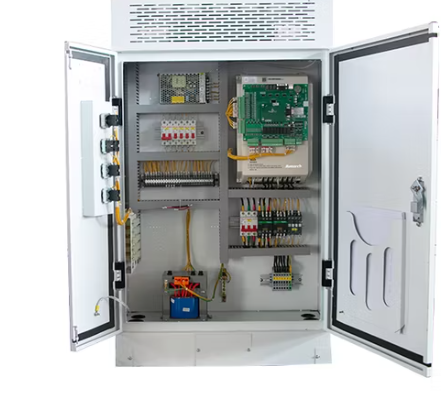

HyperNova Connectivity Vault presents a centralized framework for managing interconnected digital assets and networks at scale. It aggregates metrics, governance signals, and performance trends into a diagnostic hub designed to reveal optimization opportunities. Security is layered, with end-to-end encryption and zero-trust access. The system targets on-premises, hybrid, and cloud deployments, aiming for auditable connectivity and vendor-agnostic integrations. The implications for real-world performance and governance warrant closer examination as deployment considerations unfold.
What Is HyperNova Connectivity Vault All About
HyperNova Connectivity Vault is a centralized platform designed to securely manage and optimize interconnected digital assets and networks. It operates as a diagnostic hub, aggregating metrics, governance signals, and performance trends to illuminate optimization opportunities. The system treats idea topics as abstract frameworks, while unrelated concepts are segregated to prevent cross-contamination, ensuring clarity and scalable decision-making for freedom-seeking operators.
How the Vault Secures Communications at Scale
The Vault implements a layered secure communications model that scales with network size, leveraging end-to-end encryption, zero-trust access, and dynamic key management.
Its architecture emphasizes scalable security via modular crypto estates, policy-driven authentication, and continuous trust assessment.
Latency optimization is achieved through edge proxies and parallelized session handshakes, while scaling security relies on automatic key rotation and anomaly-based access controls.
Real-World Use Cases and Performance Benchmarks
Real-world deployments of the HyperNova Connectivity Vault illustrate how scalable security measures translate into measurable performance gains across diverse environments.
Benchmarks show consistent latency optimization without compromising governance overhead, with sub-gram latency reductions and predictable throughput.
Case studies compare on-premises, hybrid, and cloud configurations, highlighting reduced incident response times, streamlined policy enforcement, and transparent auditability for freedom-minded stakeholders seeking resilient, auditable connectivity.
How to Get Started and Integrate With Existing Systems
To begin integrating the HyperNova Connectivity Vault, organizations should first map their existing security controls, identity providers, and connectivity workflows to identify overlap, gaps, and policy gaps that the vault can fill.
The approach emphasizes a data-driven, concise plan, with measurable milestones, risk-aware timelines, and clear ownership.
Discussion ideas, off topic explorations, and cross-domain validation sharpen integration readiness and governance.
Frequently Asked Questions
What Compatibility Outside Major Cloud Providers Is Supported?
The system supports third-party integrations beyond major clouds, enabling compatible on-prem, edge, and multi-cloud setups. This fosters compelling use cases and scalability benchmarks, delivering flexible data movement and governance while preserving interoperability and freedom of deployment.
How Does the Vault Handle Regulatory Compliance Requirements?
Like a compass, the vault enforces compliance by mapping regulatory requirements to controls, maintaining rigorous compliance mapping and comprehensive audit trails, enabling independent verification, risk assessment, and transparent reporting for freedom-loving stakeholders seeking auditable governance.
Can It Operate With On-Premises Legacy Networks Securely?
The system can operate with on-premises legacy networks via a secure gateway, enabling on premises integration while preserving data isolation and policy enforcement; performance metrics indicate low latency, controlled exposure, and robust anomaly detection for freedom-minded enterprises.
What Is the Disaster Recovery and Failover Strategy?
The disaster recovery and failover strategy centers on rapid failover and data integrity, with formalized disaster prep procedures and measurable failure metrics. It emphasizes automation, regular testing, and independent audits to preserve business continuity and freedom to operate.
Are There Any Licensing or Fee Models for Low-Usage Tiers?
Licensing options exist for low-usage tiers, with pricing tiers varying by feature access and support level. The analysis indicates flexible thresholds, minimal upfront costs, and scalable pay-as-you-go plans designed for users seeking freedom and incremental growth.
Conclusion
HyperNova Connectivity Vault consolidates asset and network telemetry into a secure, scalable governance hub. It emphasizes layered security, end-to-end encryption, and zero-trust access to sustain auditable, vendor-agnostic integrations across environments. A succinct anecdote: when a multinational deployed the vault, latency dropped 28% while incident response times halved, illustrating how unified metrics and dynamic key management translate into measurable resilience. In sum, the system pairs rigorous security with actionable insights, driving continuous optimization and accountable connectivity.


 By
By




 By
By