
An X-ray system can only perform as well as the components powering it. The X-ray source and high-voltage generator must work together to deliver the required voltage, current, stability, and power without placing unnecessary stress on either component. For OEMs developing inspection, imaging, analytical, or medical equipment, selecting compatible components is therefore an important engineering decision. Working with experienced compact high-voltage X-ray source makers can help ensure that the source and generator are properly matched to the application’s technical and physical requirements.
Start With the X-Ray Tube Requirements
The first step is to understand the operating requirements of the X-ray tube. Every tube has specific voltage and current ranges, and the generator must be capable of supplying them consistently.
Key parameters include:
- Maximum and minimum operating voltage.
- Tube current requirements.
- Maximum power.
- Continuous or intermittent operating cycles.
- Focal spot requirements.
- Intended beam configuration.
- Cooling requirements.
Voltage determines X-ray energy. The generator must meet the source’s operating requirements, while excessive capacity offers no guaranteed benefit and may add unnecessary complexity, cost, and integration challenges.
Calculate Power Before Choosing the Generator
Voltage and current should not be considered separately. Their relationship determines the electrical power available to the X-ray source.
The basic relationship is:
Power = Voltage × Current
For example, an X-ray source operating at 100 kV and 2 mA requires approximately 200 W of electrical output under those conditions. The generator must therefore be capable of delivering the required combination of voltage and current while maintaining stable operation.
However, simply matching the maximum wattage is not enough. Engineers should examine the generator’s continuous power rating, operating duty cycle, efficiency, and thermal behavior. A system designed for short inspection pulses may have different requirements from equipment expected to operate continuously on a production line.
Match Voltage Range and Stability
Voltage compatibility is another critical consideration. The generator should provide an output range appropriate for the X-ray source rather than operating at the edge of its capabilities. Stable high voltage is important because fluctuations can affect X-ray output and, consequently, imaging or measurement consistency. This becomes particularly important in applications such as material analysis, thickness gauging, security inspection, and medical imaging, where repeatable results are essential.
Engineers should therefore review specifications such as:
- Voltage stability
- Voltage ripple
- Output regulation
- Current stability
- Response to changing loads
These characteristics can be just as important as the generator’s maximum voltage rating.
Consider the Application and Duty Cycle
The right generator also depends on how the X-ray system will be used. A portable inspection device has different priorities from a fixed industrial scanner or a high-throughput security system. For portable equipment, size, weight, power consumption, and ruggedness may be major considerations. Industrial systems may place greater emphasis on continuous operation, cooling, and high output power.
Medical systems may require highly controlled and repeatable output. The duty cycle should also be examined carefully. If the source operates for extended periods, the generator and cooling system must be able to handle the associated thermal load. Selecting components based only on peak output can lead to overheating or reduced service life.
Check Filament and Control Compatibility
The high-voltage generator does more than provide tube voltage. Depending on the system design, the power architecture may also need to support filament heating and control functions. The filament supply affects electron emission from the X-ray tube, so its requirements must be compatible with the selected tube.
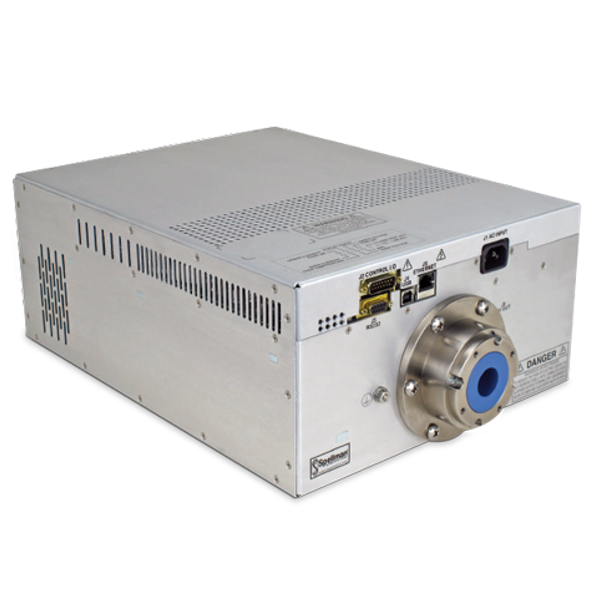
Control interfaces are equally important when the generator needs to communicate with the system’s software or control electronics. This is one reason integrated designs can simplify system development. Some X-ray sources combine the X-ray tube, high-voltage inverter, filament supply, and other components into one assembly.
Evaluate Size, Cooling, and Integration
Electrical compatibility is only part of the selection process. The physical design of the generator must also fit the equipment architecture.
Engineers should evaluate:
- Available installation space
- Generator and control-unit weight
- Cooling method
- Heat dissipation
- Cable and connector requirements
- Shielding considerations
- Maintenance accessibility
Compact components can be particularly valuable when developing systems with strict size or weight limitations.
Think About the Complete System, Not Individual Components
One of the most common mistakes is selecting an X-ray source and generator independently based solely on individual specifications. A component may look suitable on paper but still create integration challenges when connected to the rest of the system.
A better approach is to evaluate the complete operating environment. This includes the X-ray tube, generator, control electronics, cooling system, detector, shielding, and intended application. Engineers should also consider future requirements. If an OEM expects the system to evolve toward higher output, longer operating cycles, or a different imaging configuration, the power architecture should leave enough flexibility for those changes.
Why Component Expertise Matters
Choosing compatible components often requires more than comparing voltage and wattage figures. Experienced manufacturers understand the relationship between tube behavior, high-voltage generation, thermal management, control systems, and application requirements.
For OEMs, this expertise can reduce integration time and help avoid problems that appear only during testing. VJ X-Ray has more than three decades of experience in X-ray technology and high-voltage design and develops both integrated X-ray sources and high-voltage generators for applications spanning industrial, medical, security, electronics, food, and analytical systems.
See also: Shrink Wrapping Machine: An Efficient Solution for Modern Packaging
Conclusion
Matching an X-ray source with the right generator requires attention to voltage, current, power, stability, duty cycle, filament requirements, cooling, and physical integration. The goal is not simply to find a generator with a suitable maximum rating but to create a balanced power system that performs reliably under real operating conditions. Working with experienced high-voltage generator X-ray manufacturers can make this process more straightforward by helping OEMs evaluate compatibility at the system level and select solutions suited to their specific application.
VJ X-Ray is an experienced X-ray technology company specializing in X-ray sources, high-voltage generators, and integrated solutions. The company develops compact, reliable technologies for industrial, medical, security, electronics, food inspection, and analytical applications, supporting OEMs with solutions designed for diverse system requirements.


 By
By