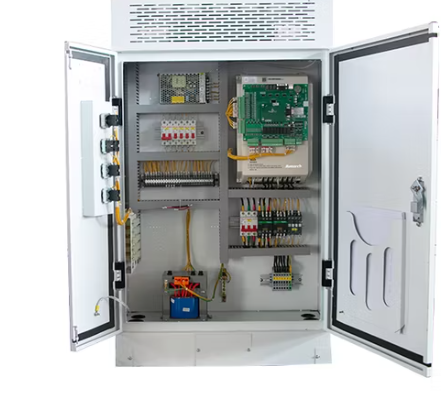

The OrbitMatrix Intelligence Hub integrates centralized data streams with modular analytics to produce rapid, governance-backed insights. Real-time processing enables low-latency, privacy-preserving correlations across multi-tenant environments. The architecture supports elastic throughput, fault tolerance, and decoupled interfaces, while dashboards emphasize privacy by design and data minimization. Governance and provenance ensure auditable decisions and consistent metadata. The framework invites evaluation of how autonomy, transparency, and scalability intersect as signals evolve—and what that implies for future deployments.
OrbitMatrix Intelligence Hub and the 18884864356 Insight
The OrbitMatrix Intelligence Hub integrates centralized data streams and analytical modules to support rapid synthesis of complex signals.
The 18884864356 Insight emerges from disciplined insight synthesis processes, aligning cross-domain data with governance policies.
This articulation emphasizes transparent data lineage, consistent metadata, and auditable decisions, enabling stakeholders to assess reliability.
Structured governance enables disciplined exploration, minimizing risk while preserving freedom to pursue independent analytic inquiry.
Real-Time Data Processing for 4086763310 and Beyond
Real-Time Data Processing for 4086763310 and Beyond addresses the mechanisms by which streaming inputs are ingested, transformed, and routed to analytic modules with minimal latency.
The architecture supports real time streams, enabling privacy preserving data correlation and secure, scalable analytics.
User centric dashboards present insights while preserving autonomy, transparency, and freedom, fostering informed decision-making without unnecessary burden.
Scalable Architecture for 8169559260, 3479019282, 8043424031
Scalable architecture for 8169559260, 3479019282, and 8043424031 integrates modular components to support elastic throughput, fault tolerance, and secure multi-tenant operation. It emphasizes scalable patterns and resilient pipelines, enabling independent service scaling and end-to-end reliability. The design favors decoupled interfaces, stateless processing, and observability to sustain performance while maintaining freedom from rigid constraints.
From Data to Decisions: Privacy-Forward, Integrative Dashboards
In privacy-forward analytics, integrative dashboards consolidate multi-source data while enforcing explicit data minimization, access controls, and provenance tracking to support informed decision-making without overexposure of sensitive information.
They enable privacy preserving insights through robust data governance and clearly defined roles, balancing transparency and security.
Real time processing informs agile decisions, while scalable architecture sustains consistent, compliant analytics across evolving datasets.
Frequently Asked Questions
How Does Orbitmatrix Ensure Data Sovereignty Across Regions?
Data sovereignty is upheld by enforcing regional governance, with data localization, access controls, and compliant retention policies. OrbitMatrix ensures regional governance, audits, and cross-border transfer safeguards, maintaining consistent standards across jurisdictions while preserving autonomous data stewardship and user freedom.
What Are the Training Requirements for Operators?
Statistically, 72% of operators complete onboarding within two weeks. Training requirements emphasize certifications, scenario drills, and compliance checks. The overview covers operator onboarding, risk awareness, and system calibration, ensuring consistent performance across diverse regional deployments.
Can It Integrate With Legacy On-Prem Systems?
The system can integrate with legacy on-prem environments, though integration latency may vary; proper data schema alignment is essential to minimize delays, ensure compatibility, and preserve interoperability while maintaining operational autonomy and flexibility for users seeking freedom.
How Is AI Model Bias Mitigated in Insights?
AI model bias is mitigated through rigorous evaluation protocols and monitoring; biased evaluation indicators trigger audits, model recalibration, and disclosure. Techniques include synthetic data augmentation, fairness constraints, and continuous validation against diverse, representative benchmarks to ensure robust insights.
What Are the Cost Implications for Small Teams?
Cost implications for small teams center on upfront licensing, scalable usage, and integration costs; total expenses may grow with data volume and feature sets, while modular plans and open architectures potentially reduce long-term TCO and enable agile experimentation.
Conclusion
OrbitMatrix Intelligence Hub demonstrates a cohesive integration of real-time processing, scalable architecture, and privacy-forward dashboards to transform data into informed decisions. Its governance and provenance layers ensure auditable, transparent analytics across multi-tenant environments. Example: a hypothetical financial-services scenario uses low-latency correlations to detect fraud while preserving customer privacy through data minimization and access controls. The result is rapid, autonomous insight with auditable decision trails and resilient, elastic performance.


 By
By




 By
By